
Ways to Fund Your Film: A Strategic Guide for Independent Filmmakers
Independent film funding rarely comes from a single source. Many productions combine funding streams based on their story, genre, locations, and target audience.
Understanding these options can help filmmakers identify suitable partners and build a practical funding plan. From private investors and grants to sponsorships and product placement, each approach offers different benefits and requirements.
This guide explores 11 funding sources and strategies that independent filmmakers can consider when bringing their projects to life.
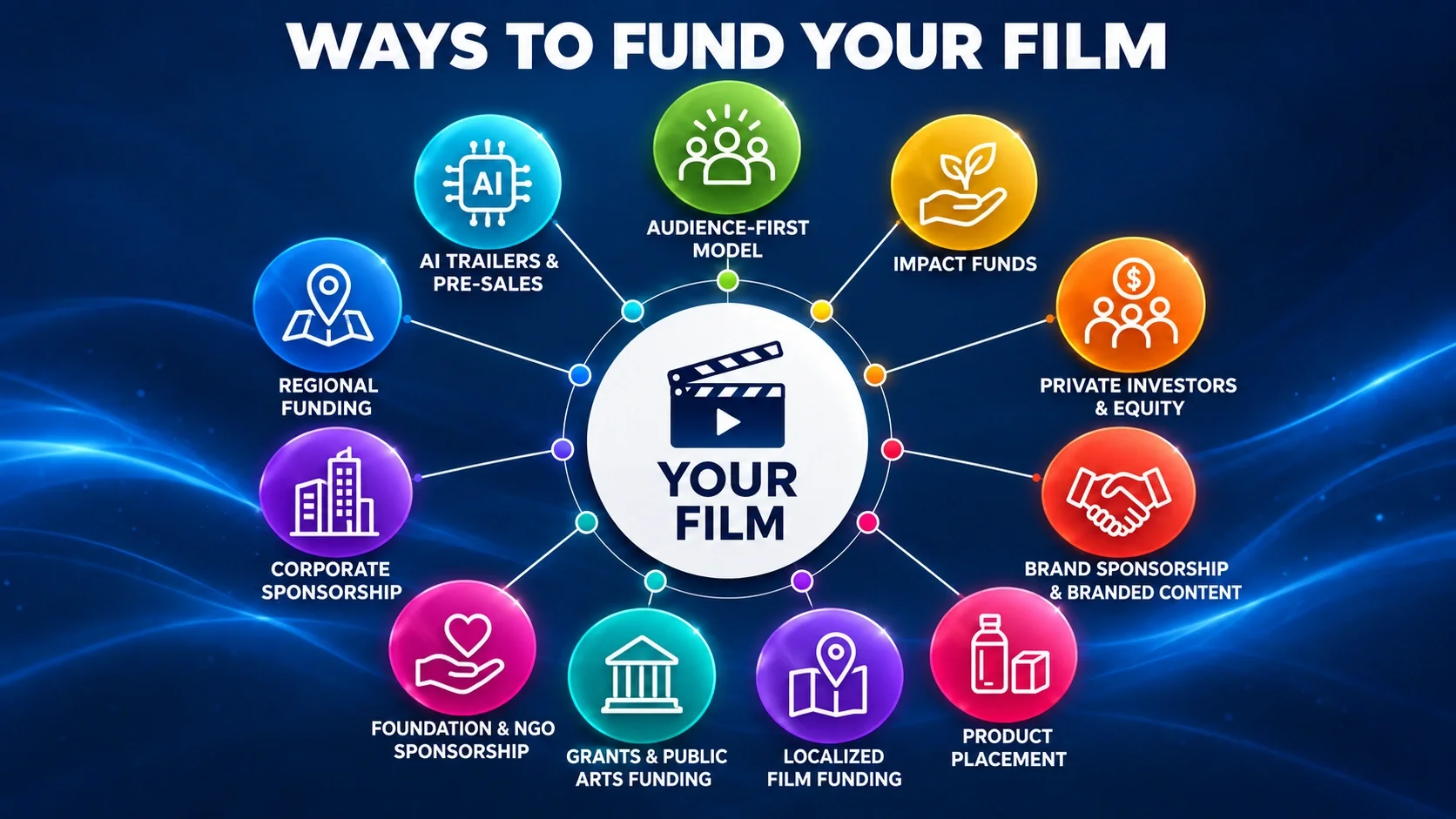
The Audience-First Film Funding Model
The Audience-First Film Funding Model approaches funding and distribution simultaneously by connecting existing audiences of organizations, brands, and products directly to your film's core subject. Rather than finishing a film and searching for viewers, this strategy identifies established communities from day one. Demonstrating direct access to an engaged demographic immediately reduces risk for financiers and builds a built-in consumer base for release.
AI-Generated Proof-of-Concept Trailers and Pre-Sales
One increasingly powerful way to help finance a feature film is to use AI to cost-effectively create a compelling trailer before the film itself is produced. Using the screenplay, character descriptions, visual references, and the director's creative vision, an AI-generated proof-of-concept trailer gives potential investors something far more tangible than a standard script or pitch deck. Instead of asking them to imagine the finished film, you can show them what the characters, world, tone, and cinematic style look and feel like, helping them visualize the finished product and its commercial potential.
A second approach is to deploy that same trailer as a sales tool for distributors and international buyers. A distributor or sales agent can present the trailer, along with the screenplay, cast attachments, and production package, to potential buyers in various territories to secure pre-sale commitments before principal photography begins. Those contracted pre-sales can then become part of the film's financing structure and, depending on the strength and terms of the commitments, directly support production financing. In effect, AI allows filmmakers to create a persuasive visual representation of the movie at a fraction of the cost of shooting a conventional proof-of-concept trailer, utilizing it both to attract equity investors and to anchor a pre-sales strategy.
Impact Funds
Impact funds back films centered on specific themes, cultural dialogues, or social issues. These organizations invest in projects that champion causes aligned with their institutional focus. Beyond direct financial backing, impact investors evaluate how effectively your film can mobilize target audiences through dedicated impact screenings, grass-roots campaigns, and strategic community partnerships.
Regional Funding
Regional film funding stems from local governments, municipal film commissions, and place-based foundations committed to economic growth in their jurisdiction. Beyond covering a notable portion of your production budget through incentives or direct contributions, strong regional ties unlock local infrastructure, discounted municipal services, and essential location support.
Private Investors and Equity
Private equity investors provide upfront cash capital in exchange for an ownership share of the film's financial returns. Private equity is often the linchpin that closes the final budget gap before guaranteed future income, tax credits, or distribution advances are realized. Presenting to private investors requires a clear path to recoupment and a transparent breakdown of waterfall structures.
Corporate Sponsorship
Corporate sponsorship occurs when an established business supports your film because your narrative touches their target demographics, core values, industry sector, or brand positioning. These partnerships can provide non-recoupable marketing funds or cash support in exchange for co-branded promotions, premiere access, and logo visibility.
Brand Sponsorship and Branded Content
Monetizing your set through brand sponsorship involves collaborating with commercial partners to produce branded content during production. By utilizing your existing set, lighting setups, and crew, sponsor brands capture original promotional material set within your film's aesthetic world, creating an efficient revenue stream that supplements production budgets.
Foundation and NGO Sponsorship
Foundations and non-governmental organizations prioritize mission-aligned storytelling over commercial profit. Securing backing from these institutions involves positioning your film as a potent educational or advocacy tool for initiatives they are already actively driving, allowing your story to amplify shared societal goals.
Grants and Public Arts Funding
Public arts funding and cultural grants offer vital non-recoupable support, meaning they do not require repayment or equity stakes. Because competition for grants is fierce and timelines are often extended, public grants should be positioned as strategic, supplementary components of a wider financial plan rather than the sole foundation of your budget.
Localized Film Funding
Localized funding activates direct support from the city, regional businesses, or community networks where your film is based. This framework works exceptionally well for stories with distinct regional roots. Local support frequently translates into direct cash investments, donated locations, discounted production services, and grassroots promotional support from regional stakeholders.
Film Product Placement
Product placement integrates real-world brands, vehicles, tech hardware, or wardrobe directly into your narrative scenes. Depending on production scale, product placement can secure upfront cash integration fees or offset line-item expenses through trade-outs and donated inventory, reducing overall cash demands on production.
Build a Funding Strategy That Fits Your Film
A strong funding plan connects your film’s creative vision with partners who have a reason to support it. Start by defining your audience, preparing a realistic budget, and developing clear pitch materials. Then research the investors, grant programs, businesses, and organizations that align with your project.
Combining several compatible funding sources can reduce reliance on any one partner. Whether you are developing your first independent feature or preparing your next production, a focused approach can help move your film from concept toward production.
Source and Further Reading:
Explore guides, directories, and resources at FilmDaily.tv Film Funding Studio.
Double-click to edit...