
LED Wall vs Green Screen: Which Virtual Production Setup Is Right for Your Project?
Virtual production has transformed filmmaking, commercial production, and branded content creation. What once required expensive location shoots or complex post-production can now be achieved inside a controlled studio environment using either LED walls or traditional green screen technology.
But which setup is right for your production?
At American Movie Company, we work with brands, agencies, filmmakers, and content creators using both virtual production workflows. Choosing the right solution depends on your project goals, budget, timeline, and creative needs.
Here’s a breakdown of the differences between LED walls and green screens, along with the advantages and best use cases for each.
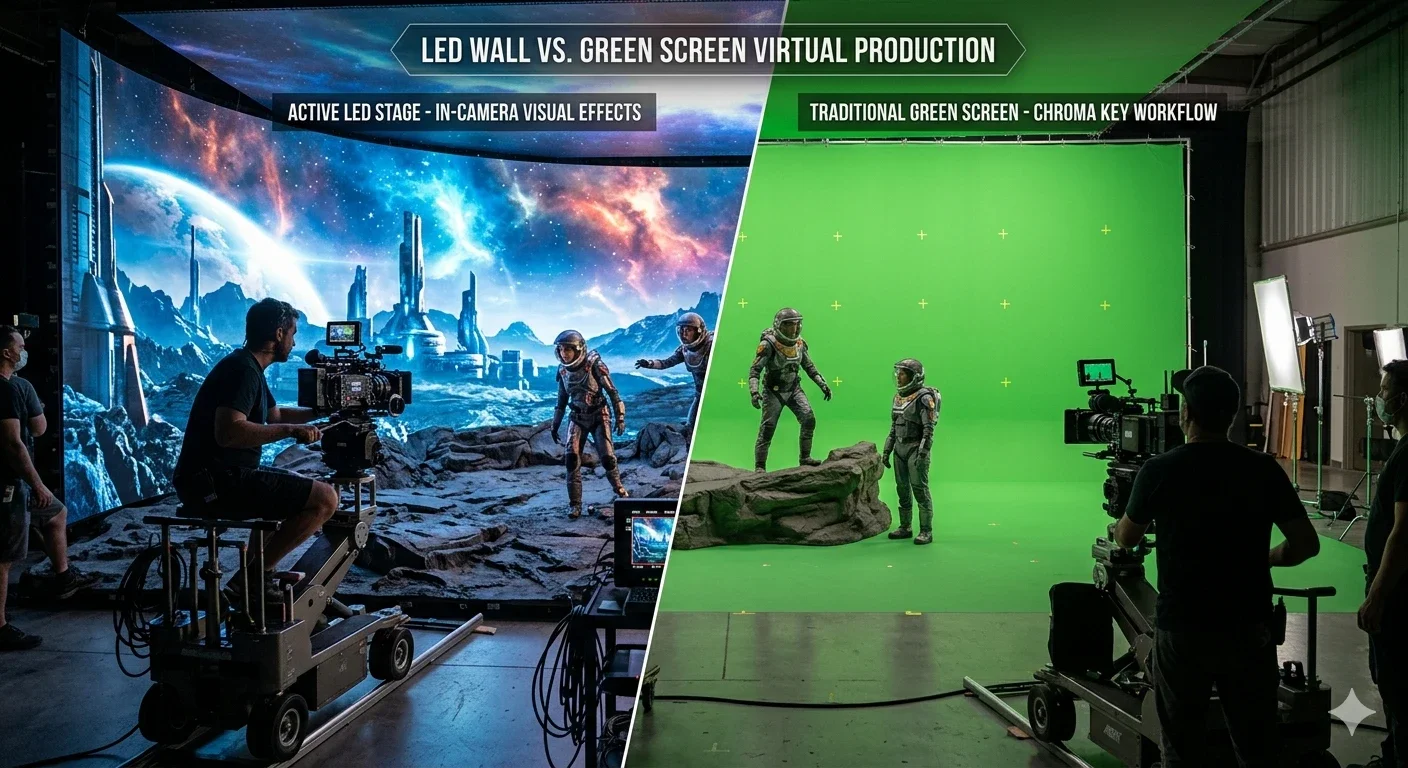
What Is an LED Wall?
An LED wall is a large, high-resolution digital display used as a real-time background during filming. Instead of replacing backgrounds in post-production, the environment appears live behind the talent while shooting.
LED walls are commonly used in:
Commercial production
Music videos
Corporate content
Virtual sets
XR production
Film and television
The technology became widely known after productions like The Mandalorian popularized real-time virtual production workflows.
Advantages of LED Walls
Realistic Lighting
Because the environment is displayed live, the LED wall naturally casts realistic light and reflections onto subjects, props, and vehicles.
Faster Post-Production
Many visual elements are captured in-camera, reducing the amount of compositing and keying required later.
Better Talent Performance
Actors and presenters can see the environment around them instead of imagining it against a green backdrop.
Real-Time Creative Flexibility
Directors and cinematographers can adjust environments instantly during production.
What Is Green Screen Production?
Green screen production uses a solid green backdrop that is digitally replaced during post-production using chroma key compositing.
This workflow has been an industry standard for decades because it is flexible, affordable, and highly adaptable.
At American Movie Company Studios, green screen stages are frequently used for:
Commercials
Interviews
Corporate presentations
Product videos
Streaming content
Visual effects shoots
Advantages of Green Screen
Lower Production Costs
Green screen production is typically more affordable than LED wall virtual production.
Unlimited Background Possibilities
Because environments are added later, creative teams have virtually unlimited flexibility during post-production.
Easier for Smaller Productions
Green screen workflows remain ideal for smaller crews, simpler productions, and projects with limited budgets.
Proven Workflow
Most editors, VFX artists, and production teams already understand chroma key pipelines.
LED Wall vs Green Screen: Key Differences
| Feature | LED Wall | Green Screen |
|---|---|---|
| Background appears live during filming | Yes | No |
| Requires post-production compositing | Minimal | Extensive |
| Realistic lighting and reflections | Excellent | Limited |
| Upfront production cost | Higher | Lower |
| Flexibility after filming | Moderate | Very high |
| Best for realism | Excellent | Good |
| Best for budget-conscious projects | Moderate | Excellent |
| Best for fast delivery timelines | Excellent | Moderate |
When Should You Use an LED Wall?
LED wall production is ideal when:
Realistic lighting is critical
The project involves reflective surfaces or vehicles
You want faster turnaround times
The production relies heavily on virtual environments
You need high-end cinematic visuals
Typical LED wall projects include:
Automotive commercials
Luxury brand campaigns
Music videos
Fashion shoots
High-end corporate films
When Should You Use Green Screen?
Green screen production is usually the better option when:
Budget efficiency matters most
Extensive VFX will be added later
Multiple background options are needed
The production is relatively simple
You need maximum flexibility in post-production
Typical green screen projects include:
Corporate presentations
Streaming content
Product demos
Educational videos
Interview setups
Cost Considerations
LED wall production generally requires:
Advanced virtual production hardware
Real-time rendering systems
Higher technical staffing
More complex setup requirements
Green screen productions usually involve:
Simpler stage setups
Lower equipment costs
More post-production labor
The right choice often comes down to balancing production costs against post-production costs.
The Future of Virtual Production
Virtual production continues to evolve rapidly as brands demand faster workflows, cinematic visuals, and more efficient content creation.
Many productions now combine both technologies depending on the scene requirements. Hybrid workflows allow creative teams to maximize flexibility while controlling costs.
At American Movie Company, we help you choose the best production setup for your goals, timeline, and budget using modern virtual production tools, including LED walls, green screen stages, XR environments, and AI-assisted workflows.
Which Setup Is Right for Your Production?
There is no universal answer. The best solution depends on:
Creative goals
Budget
Timeline
Post-production needs
Visual complexity
If your project demands cinematic realism and fast turnaround, an LED wall may be the right investment.
If flexibility and affordability are the priority, green screen production remains an incredibly powerful option.
Whether you are producing a commercial, branded campaign, corporate video, or virtual production experience, choosing the right environment can dramatically impact the final result.
To learn more about virtual production services, studio rentals, and AI-powered commercial production, visit American Movie Company.
Need help deciding between LED wall and green screen production?
Contact us to discuss your project, studio needs, and virtual production workflow.
Double-click to edit...