
How to Attract Investors to Your Film or TV Project
Investing in film and television can be exciting, glamorous, and occasionally very profitable. It can also be incredibly risky.
Because of that risk, serious investors today rarely write checks based solely on a screenplay and a handshake. They demand structure, protection, transparency, and a realistic path toward recoupment.
The following breakdown outlines the core requirements professional film and TV investors look for before committing capital to a project.
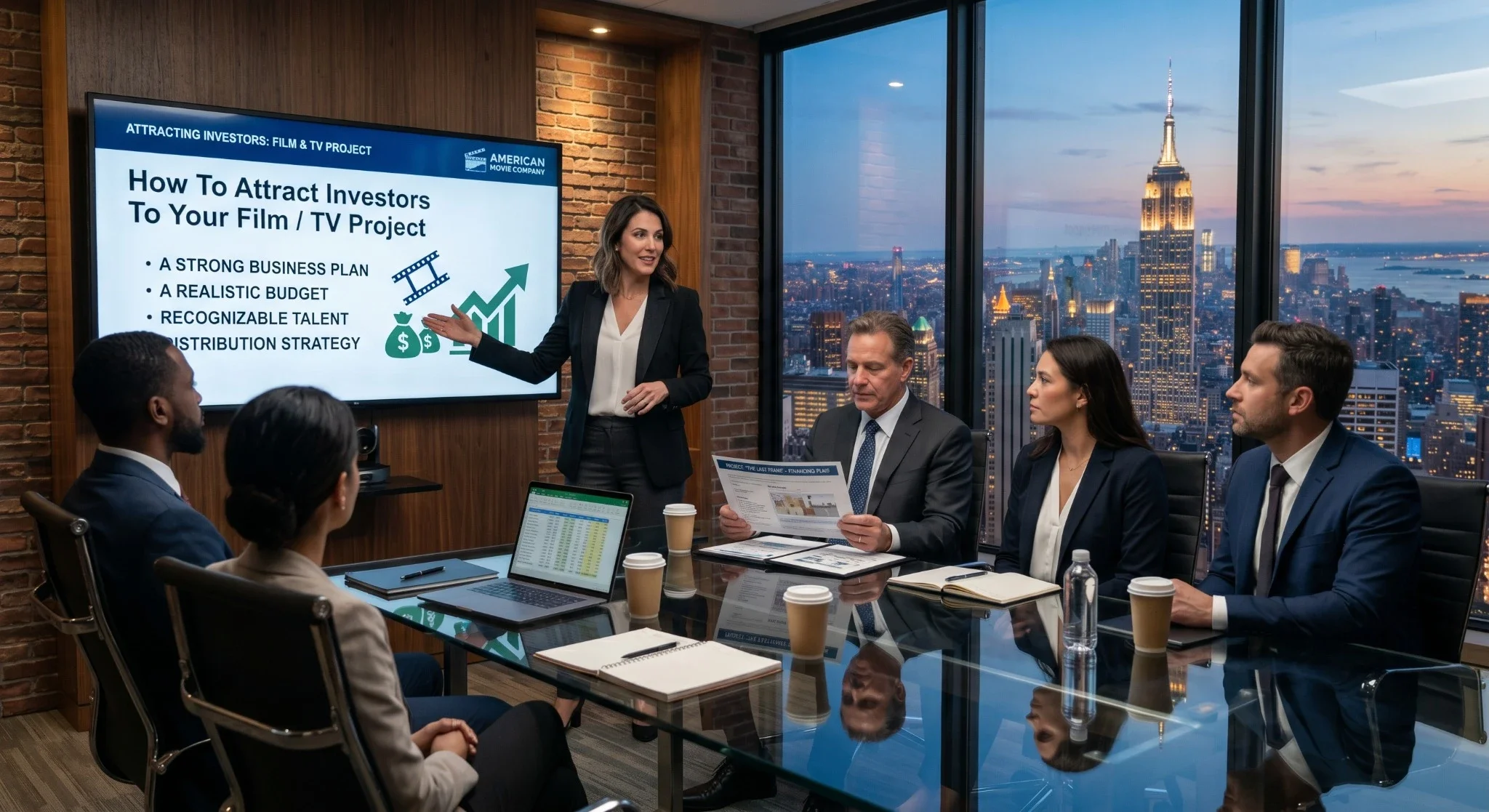
1. A Strong Business Plan
A film is simultaneously an art piece and a business venture. To take you seriously, investors typically expect a comprehensive business plan that includes:
Executive Summary: A high-level overview of the project's creative vision and commercial viability.
Production Budget & Financing Plan: How much it costs, and where the money is coming from.
Revenue Projections & Distribution Strategy: A realistic look at how the project will make money.
Comparable Projects ("Comps"): Data from similar films/shows to justify your financial projections.
Risk Analysis & Mitigation: An honest assessment of potential hurdles and how you plan to overcome them.
Production Timeline: Clear milestones from pre-production to release.
The Bottom Line: A well-organized presentation immediately separates serious production companies from dreamers.
2. A Realistic Budget
Experienced investors can spot "fantasy budgets" instantly. They want to see a granular breakdown demonstrating that you know exactly where every dollar is going:
Above-the-Line Costs: Talent, directors, producers, and script acquisition.
Below-the-Line Costs: Crew, equipment rentals, and studio/location fees.
Post-Production Expenses: Editing, color grading, sound design, and VFX.
Administrative & Legal: Insurance premiums, legal fees, and marketing expenses.
Contingency Reserves: A safety net (typically 10%) for unexpected overages.
3. Experienced Producers
Investors ultimately invest in people just as much as they invest in concepts. They look for a production team with a proven track record of execution:
Finishing projects on time and staying on budget.
Navigating complex distribution landscapes.
Managing crews professionally and handling legal or insurance disputes.
Solving high-pressure problems on set.
Note: While first-time filmmakers can absolutely raise money, pairing them with experienced producers dramatically improves investor confidence.
4. A Modern Distribution Strategy
The single biggest question an investor will ask is: “How does this project actually make money?” The days of "we’ll figure out distribution at festivals" are largely over. Investors want to see a multi-platform approach:
Theatrical & Streaming: Strategies for traditional cinema versus SVOD (Netflix, Prime, etc.).
Foreign Sales & Pre-sales: Capitalizing on international markets.
Television Licensing: Broadcast and cable syndication opportunities.
AVOD & FAST Channels: Monetization via ad-supported video-on-demand and free streaming television.
Alternative Revenue: Social media monetization, brand integration, and product placement.
5. Recognizable Talent
Attaching recognizable actors, directors, hosts, influencers, or musicians significantly de-risks a project. "Name talent" instantly unlocks doors for:
Securing distribution agreements.
Boosting international pre-sales and estimates.
Amplifying organic marketing and audience awareness.
Driving early streaming platform interest.
6. Solid Legal & Financial Structure
Professional investors will require a properly formed business entity to shield them from liability and ensure proper corporate governance. This structure typically requires:
A dedicated LLC or Corporation for the project.
A clear Operating Agreement outlining decision-making power.
Subscription Agreements and robust investor documentation.
Strict compliance with state and federal securities laws.
Standardized entertainment accounting procedures.
7. Completion Planning
Nothing scares an investor more than an unfinished film. They need ironclad reassurance that the project will make it across the finish line through:
Rigid production schedules and locked crew commitments.
Established vendor relationships and guaranteed equipment access.
Comprehensive production insurance (and completion bonds where applicable).
A thoroughly planned post-production workflow.
8. Tax Incentive Strategy
Many modern productions rely heavily on government incentives to mitigate investor risk. Investors will want to know the specifics of your tax strategy:
Which state or country incentives apply to your shoot.
The transferability and monetization of those tax credits.
Estimated rebate amounts and the exact timing of those payouts.
Whether the incentives are already approved or pending.
Industry Insight: Jurisdictions like Georgia, New York, New Jersey, New Mexico, and Louisiana have become massive production hubs precisely due to their aggressive, reliable tax incentive programs.
9. Marketing & Audience Awareness
Even masterpieces disappear if nobody knows they exist. Investors increasingly look for projects that already have a built-in audience or a bulletproof marketing plan:
A dedicated social media and online community-building strategy.
Strategic influencer partnerships and publicity plans.
High-impact trailer concepts and a targeted film festival strategy.
10. Transparency & Reporting
Finally, professional investors expect ongoing, transparent communication. Your financial structure should clearly outline:
Regular budget and spending oversight reporting.
Routine production and post-production updates.
A clearly defined recoupment waterfall (who gets paid back first, and in what order).
Transparent profit participation and residual terms.
Final Thoughts
Film and television financing has evolved dramatically. Today’s investors are not simply funding art; they are evaluating risk, marketability, audience potential, and corporate management.
In the modern entertainment business, great storytelling still matters—but great planning is what gets the check written.
For more insights on film production, virtual production, LED volumes, green screen studios, AI production workflows, teleprompting, and webcasting, visit the American Movie Company.
Double-click to edit...