
The History of Green Screen Technology: From Movie Magic to Virtual Production
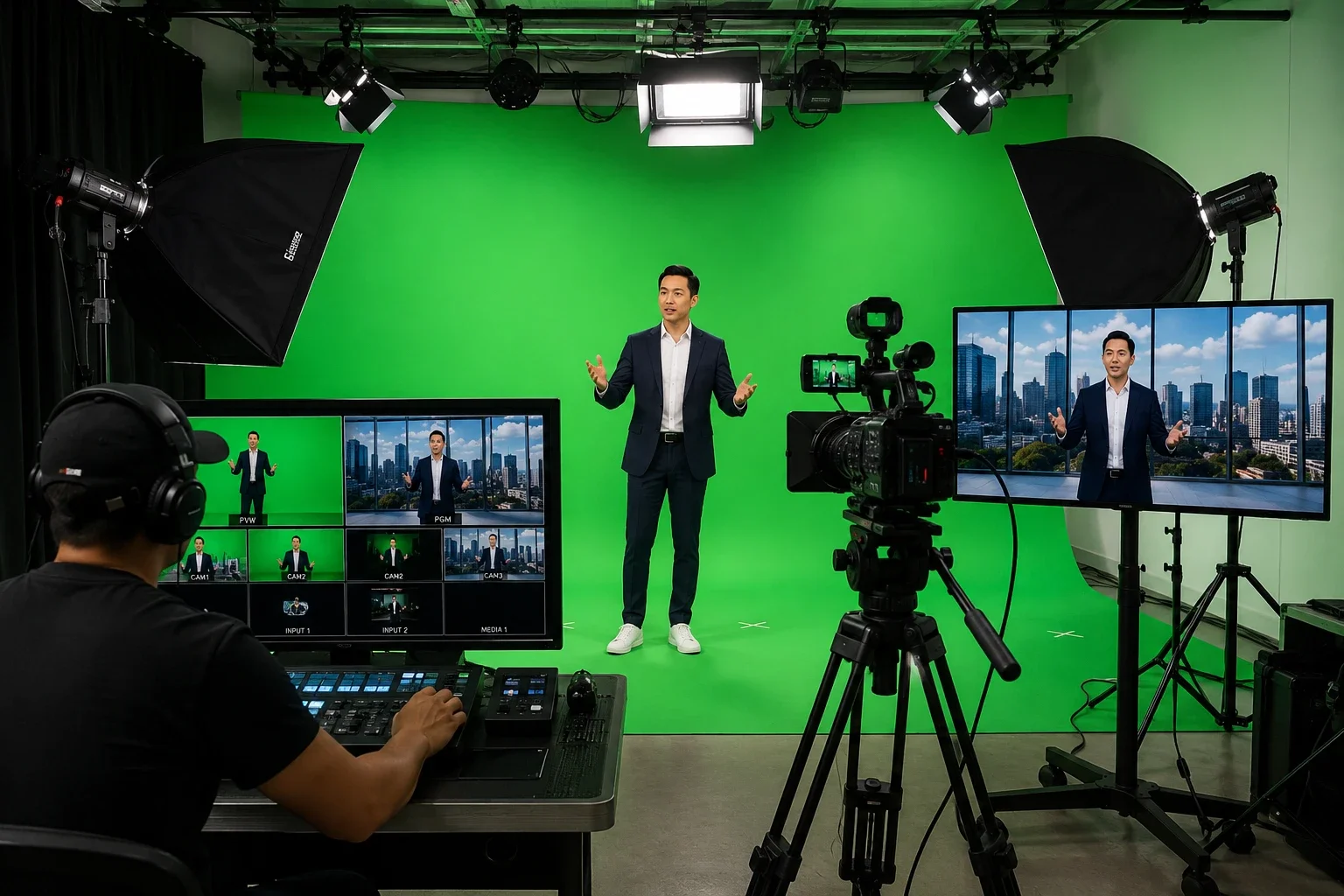
Today, green screens are everywhere. Hollywood blockbusters, YouTube videos, livestreams, weather broadcasts, online courses, and even Zoom calls rely on chroma key technology to place people into virtual worlds. What looks simple today actually began more than a century ago through experimental filmmaking and optical illusions.
The evolution of green screen technology is one of the most fascinating stories in film and media history.
The Origins of Visual Effects
Long before digital editing existed, filmmakers were already experimenting with ways to combine multiple images into a single scene.
In the early 1900s, French filmmaker Georges Méliès pioneered cinematic illusions using double exposures, painted sets, disappearing effects, and layered film techniques. His 1902 film A Trip to the Moon became one of the earliest examples of visual storytelling enhanced through special effects.
At the time, filmmakers manually manipulated film reels frame by frame. These techniques laid the foundation for what would later become chroma key compositing.
The Birth of Blue Screen Technology
The first real version of modern green screen technology actually used blue backgrounds instead of green.
During the 1930s, Hollywood studios began developing more advanced “traveling matte” systems that allowed actors to appear in front of separately filmed backgrounds. One of the major breakthroughs came from special effects artist Larry Butler, who refined the blue-screen process while working on the 1940 fantasy film The Thief of Bagdad.
His work was revolutionary and earned an Academy Award for visual effects.
Blue was originally chosen because:
Human skin tones contain very little blue
Early film stock responded well to blue separation
It helped isolate actors from the background more accurately
For decades, blue screen became the standard visual effects method in Hollywood.
Blue Screen in Classic Cinema
By the 1960s and 1970s, blue-screen compositing became a core part of large-scale film production.
Movies such as:
Mary Poppins
Superman
Star Wars
used blue screens extensively to create flying scenes, space battles, and impossible environments.
These effects were still done using optical compositing, which required enormous technical precision. Editors physically combined layers of film using specialized equipment. Even small mistakes could ruin an entire sequence.
Despite the limitations, filmmakers achieved groundbreaking visual storytelling that still holds historical significance today.
Why Green Replaced Blue
Green screen began dominating the industry during the 1980s and 1990s as digital cameras and computer-generated imagery became more advanced.
The switch happened for several important reasons.
Digital Sensors Favor Green
Modern digital cameras capture more information in the green channel than in red or blue. This produces:
cleaner edges
sharper subject isolation
less digital noise
Better Lighting Efficiency
Green backgrounds require less lighting than blue screens, making productions faster and more cost-effective.
Cleaner Keying Results
Editing software can more easily remove green backgrounds while preserving details like hair, motion blur, and semi-transparent objects.
As a result, green screen became the standard for digital filmmaking, television production, and online video creation.
The Rise of CGI and Virtual Worlds
Once green screen merged with CGI technology, filmmaking changed forever.
Movies like:
The Matrix
Avatar
Avengers: Endgame
used green-screen environments combined with computer-generated worlds to create scenes that would be impossible or too expensive to film in real life.
Entire cities, alien planets, explosions, and battle sequences could now be created digitally.
Actors often performed in empty studios surrounded only by green walls, while the final environments were added months later during post-production.
Green Screen Beyond Hollywood
Today, green screen technology is no longer limited to blockbuster films.
It is now used in:
YouTube content creation
livestreaming
corporate video production
online education
weather broadcasting
virtual events
gaming streams
social media content
Affordable lighting kits and editing software have made chroma key technology accessible to almost everyone.
Even smartphones can now perform real-time background replacement using AI-powered apps.
The Next Evolution: Virtual Production
While green screens remain widely used, the industry is now moving toward virtual production using massive LED walls.
Popularized by the Disney series The Mandalorian, these LED stages display real-time digital environments behind actors during filming instead of adding them later.
This approach offers several advantages:
realistic lighting reflections
natural actor interaction
reduced post-production time
more immersive filming environments
Many experts believe LED virtual production may eventually reduce the need for traditional green screens in high-budget productions.
Conclusion
Green screen technology began as an experimental filmmaking trick over 100 years ago and evolved into one of the most important tools in modern media production.
From silent films and blue-screen optical effects to CGI blockbusters and AI-powered virtual production, chroma key technology has continually reshaped how stories are told on screen.
What started as movie magic has now become a standard creative tool used by filmmakers, creators, educators, and businesses around the world.