
OpenAI’s First Hardware is Here, And It’s Not a Phone: Meet the Codex Micro
For months, the tech world has been buzzing with rumors about OpenAI launching a standalone consumer AI device. Many expected a smart speaker or an ambient screenless assistant to take over our homes and production sets.
Instead, OpenAI just quietly dropped its very first piece of branded hardware, and it’s aimed squarely at developers.
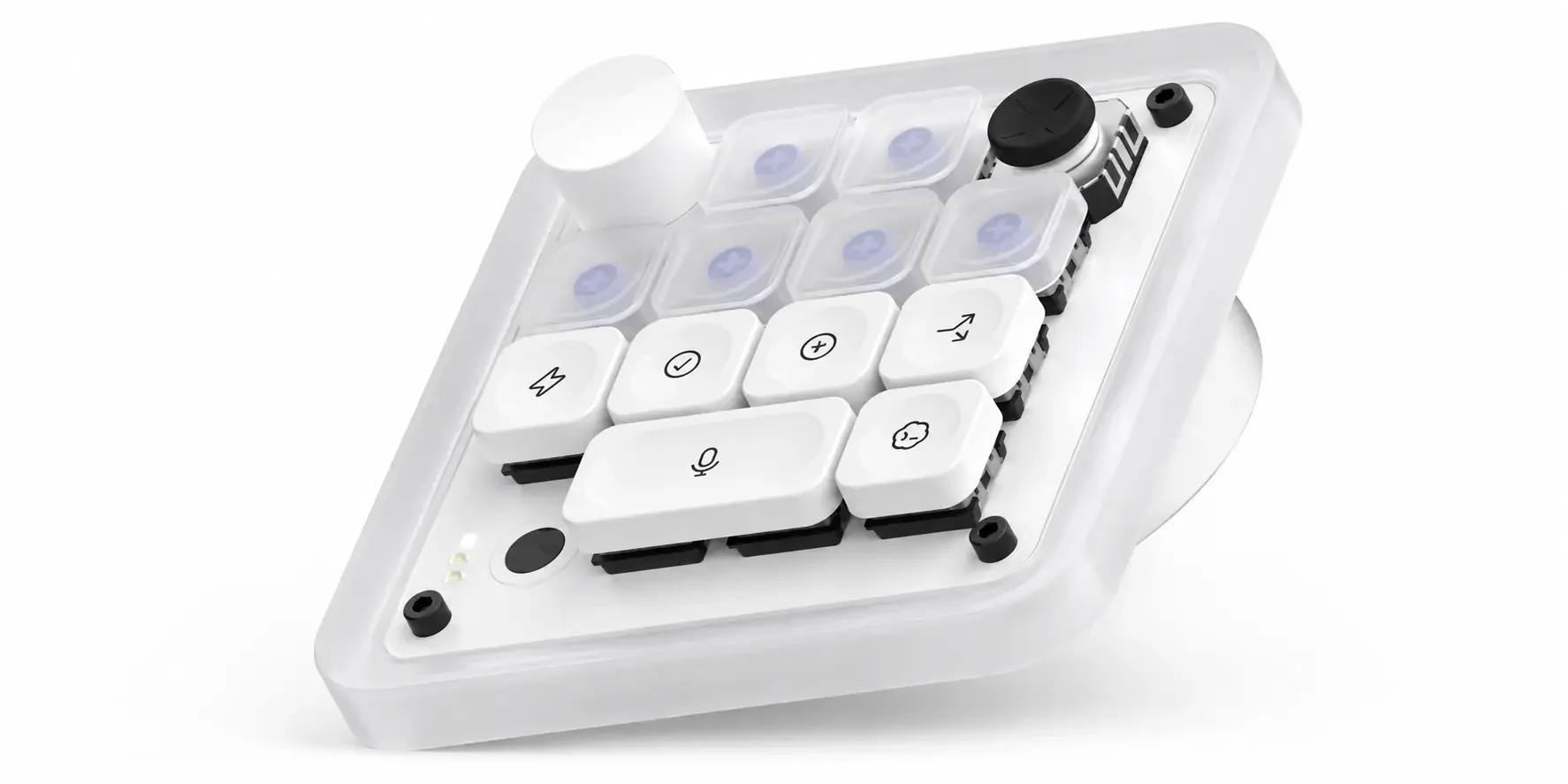
Formally designated as the kbd 1.0 codex micro, this $230 limited edition physical desktop macropad was built in collaboration with mechanical peripheral maker Work Louder. If you’ve been wondering how humans are supposed to manage an army of parallel AI coding agents without drowning in open browser tabs, OpenAI just gave us a deeply satisfying, highly tactile answer.
The core design premise is simple: reduce the friction and window switching between an AI coding agent completing a task and a developer deciding what to do next.
Moving AI Agent Supervision Outside the Screen
The Codex Micro is not built for typing out long prompts; it’s built for supervising your agent workspace through the ChatGPT Desktop App.
As OpenAI shifts its Codex platform into a space where multiple AI coding agents run simultaneously across different tasks, developers face a major UI bottleneck. The Codex Micro solves this by bringing your live workflow right onto your physical desk:
The Agent Keys: The top row features six frosted, translucent keys integrated with RGB backlighting. Each key maps directly to an active Codex thread or pinned task.
Glanceable Status Feedback: Each Agent Key changes color to show a live state from Codex before you even switch chats. White means the agent is idle; blue means it’s actively thinking; green signifies a finished task; amber indicates it is waiting on human approval; and red flags an error.
Instant Switching: A single tap on an Agent Key selects that specific agent, while a double tap immediately brings it to the foreground of your display.
Tactile Knobs, Dials, and Joysticks
What makes the Codex Micro incredibly efficient is how it translates abstract AI commands into physical, mechanical inputs.
Set the Brainpower: Want to control the computational intensity of your model? Turn the dedicated rotary encoder dial to adjust the agent's reasoning level in the moment. Keep it low and fast for simple tasks, or crank it up when the work calls for heavier, deeper thinking.
Trigger Skills Instantly: Positioned right on the pad is a small analog joystick. Flicking the joystick lets you instantly launch common Codex workflows, like reviewing a pull request (PR), debugging an active error, or refactoring code.
Keep Core Actions Close: The unit features 13 mechanical keys in total. Dedicated command keys give your most used actions a permanent shortcut: accept code changes, reject them, start a new chat, or activate push to talk for spoken prompts. Less switching, more shipping.
Premium Build for Vibecoding Power Users
Matching the physical chassis of Work Louder’s popular Creator Micro 2, the Codex Micro is a highly flexible, premium desktop addition.
It connects seamlessly via Bluetooth or USB C, is fully compatible with Mac and Windows, and is highly customizable, allowing you to reassign any key or choose exactly how the agent status lights behave. It even ships with 32 interchangeable keycaps and is sold in two distinct hardware variations depending on your workspace preference: Clicky or Silent.
The Bottom Line: A Glimpse into the Future of Work
The Codex Micro is a niche product targeting the weekly Codex users, specifically the power users tired of toggling between browser windows to check on running code.
We are officially moving past the era of just typing text into a standard chatbot window. As AI agents become autonomous coworkers, the physical hardware on our desks is adapting to help us manage them.
The device is available for pre order right now in limited quantities via OpenAI’s Supply Co. storefront. If you want to turn AI orchestration into something deeply physical, tactile, and satisfying, you will want to grab one before the limited run sells out.
Double-click to edit...