
How Virtual Production and AI Are Transforming Corporate Video
In the fast-evolving landscape of B2B marketing, staying ahead means embracing the tools that maximize both creative impact and budgetary efficiency. Corporate video production is undergoing its most significant evolution in a generation, driven by the convergence of two powerhouse technologies: LED Wall (XR) Virtual Production and Artificial Intelligence.
Far from being a passing trend, the global virtual production market is experiencing explosive growth, projected to expand at a compound annual rate of nearly 18% through 2030. For companies looking to produce world-class keynotes, presentations, and brand films, this shift is completely rewriting the rules of corporate video.
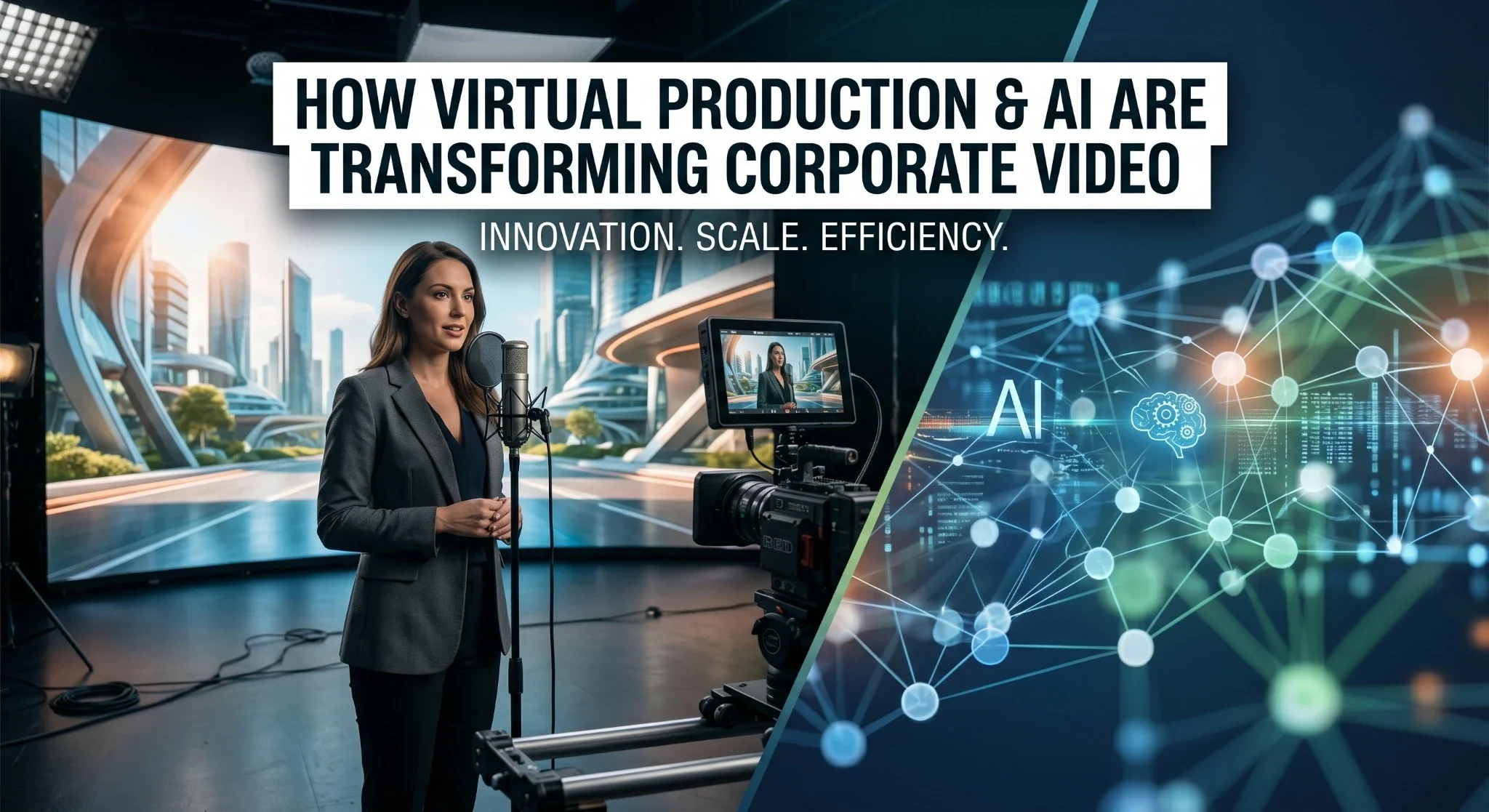
1. The Death of the Logistics Nightmare: LED Walls & XR
Traditionally, producing a high-end corporate video meant managing massive logistical headaches. If a global firm wanted its executive to appear in multiple locations, say, a futuristic tech hub, a sleek modern office, and a premium studio environment, it required weeks of scouting, travel, permits, and favorable weather.
With modern LED Wall and XR Virtual Production, those locations are brought directly to the talent. By leveraging photorealistic digital environments rendered in real time, executives can walk onto a physical stage and immediately appear to be anywhere in the world.
Using industry-standard real-time engines like Unreal Engine, production teams are transitioning from rigid, legacy workflows to a collaborative environment. This allows creative directors to capture final-pixel visual effects directly "in-camera," eliminating unpredictable variables, cutting travel costs, and bypassing the traditional "fix-it-in-post" limitations.
2. Streamlining with AI-Driven Production Workflows
While virtual production transforms what happens physically on set, Artificial Intelligence is fundamentally altering the pre- and post-production pipelines. Recent industry studies confirm that generative AI frameworks are acting as active "co-creation" partners, lowering traditional budgetary barriers and accelerating asset generation.
Pre-Production: Creative teams are utilizing generative AI tools to rapidly generate storyboards, conceptual mood boards, and initial script drafts tailored to specific target demographics. This reduces the brainstorming phase from weeks to days, allowing corporate projects to get greenlit faster.
Localization & Scale: For global brands, advanced AI video platforms (such as Synthesia, HeyGen, or Sora) enable massive scale and rapid personalization. A single keynote captured on an LED stage can utilize AI-driven localization tools for flawless translation and synchronized dubbing, instantly expanding the reach of B2B communications across international markets.
Rapid Editing Turnaround: Post-production is where automation shines brightest. Industry data highlights technical video editing and automated visual effects (VFX) as the highest-impact areas for AI productivity. Automated audio clean-up, smart color matching, and rough-cut generation mean marketing teams can distribute finalized, cinematic assets across their channels in a fraction of the time.
3. Combining Advanced Tech with Traditional Sets
Embracing virtual production and AI doesn't mean leaving classic production values behind. The most successful corporate campaigns rely on a hybrid strategy. Brands frequently pair high-tech digital environments with physical production spaces, such as a specialized green screen studio for heavy graphical overlays, a clean white cyc studio for crisp product showcases, or a realistic office set for intimate, executive interviews.
By integrating virtual backgrounds with tangible props and physical structures, the spatial illusion is complete. This delivers a flawless visual standard that captivates corporate audiences and builds massive brand authority.
The Bottom Line for Corporate Marketers
The ultimate goal of corporate video is to deliver a clear message with maximum engagement. By moving away from restrictive, legacy shooting styles and pivoting toward the agility of virtual stages and AI-assisted workflows, companies achieve an unprecedented return on investment. You save time, protect your quarterly budget, and deliver a polished, high-end final product that leaves a lasting impression on clients and stakeholders alike.