
From Cue Cards to Cameras: The Story of the Teleprompter
Introduction
Imagine delivering a speech flawlessly without memorizing every word. Today, that’s made possible by the teleprompter—a tool so seamless that audiences often don’t even realize it’s being used. But this essential piece of technology has a fascinating origin story that dates back to the early days of television.
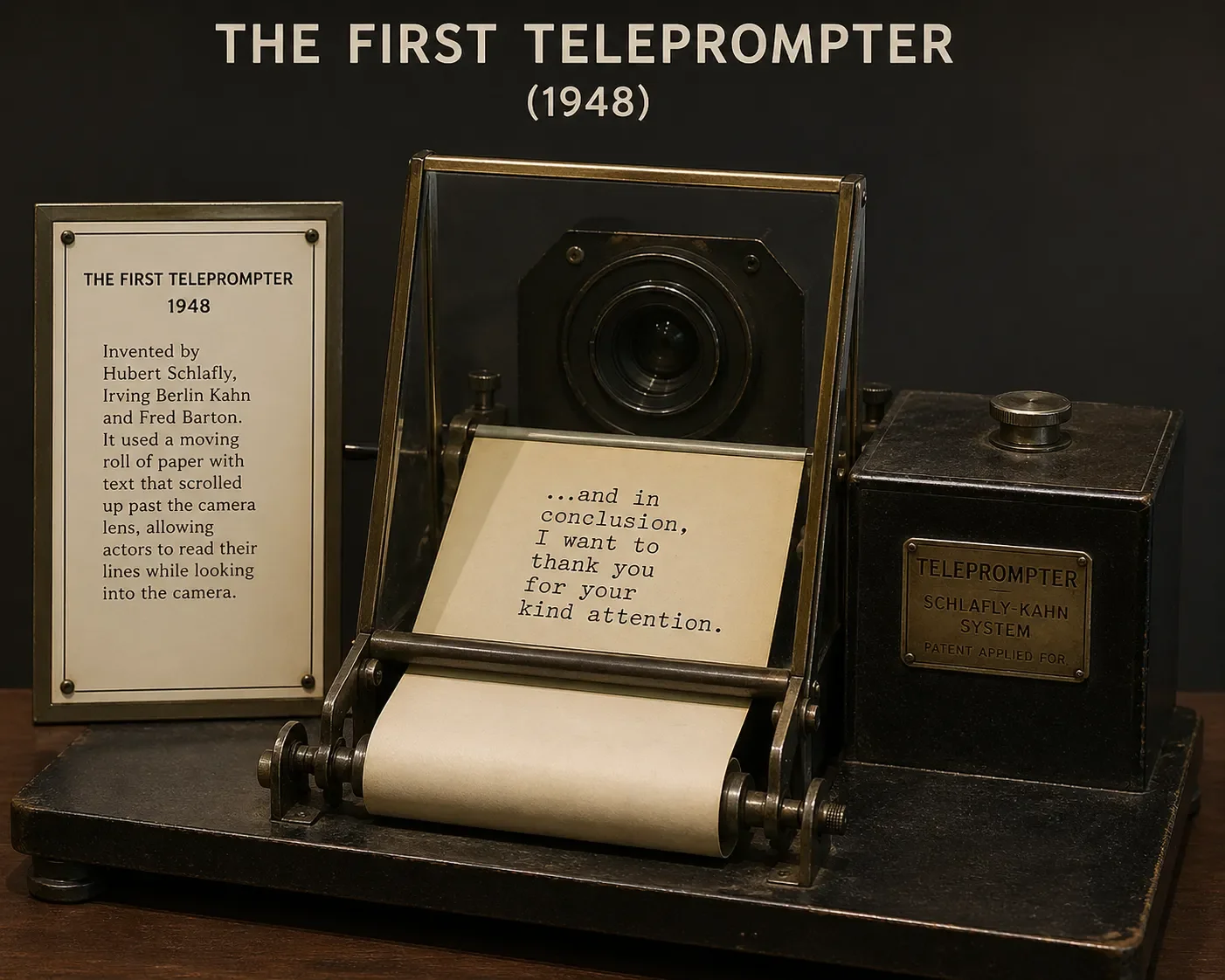
The Birth of the Teleprompter (1948)
The teleprompter was invented in 1948 by Hubert Schlafly, along with collaborators Irving Berlin Kahn and Fred Barton. At the time, television was still a young industry, and actors often struggled to memorize long scripts for live broadcasts.
To solve this, the inventors created a simple but clever system: scrolling paper scripts placed near the camera lens. This allowed performers to read their lines while maintaining eye contact with the audience, an innovation that immediately transformed on-screen delivery.
How Early Teleprompters Worked
The first teleprompters were far from the sleek devices we see today. They relied on:
Printed scripts mounted on a mechanical scrolling device
Operators who manually advanced the text
Strategic placement near the camera to maintain natural eye contact
Despite their simplicity, these early systems were groundbreaking. They made live television smoother and more professional, reducing mistakes and boosting performer confidence.
The Evolution into Modern Technology
Over the decades, teleprompters evolved alongside advancements in technology. Mechanical scrolling gave way to electronic displays, and eventually to the modern beam-splitter glass system used today. This setup reflects text onto a transparent screen positioned in front of the camera lens, making it invisible to viewers.
Modern teleprompters now feature:
Digital screens and software-controlled scrolling
Adjustable speed for natural speech pacing
Remote operation and even mobile app integration
They are widely used by:
News anchors
Politicians delivering speeches
Content creators and vloggers
Why the Teleprompter Still Matters
Even in an age of smartphones and AI tools, the teleprompter remains incredibly relevant. It helps speakers stay focused, maintain eye contact, and deliver messages clearly, especially in high-pressure situations like live broadcasts or public addresses.
Conclusion
From a simple scrolling script in 1948 to a sophisticated digital tool today, the teleprompter has played a quiet but powerful role in shaping how we communicate on screen. Thanks to innovators like Hubert Schlafly and his team, speakers everywhere can deliver their words with confidence and clarity—without missing a beat.